
Tory Burch Dresses Direct Buy Tory Burch Ella Tote
Tory Burch Dresses: Picking on Use, Cloth and Cut
Dresses are one of the most heavily stocked sections of the ready-to-wear range, and the easiest way through them is to ask what you are dressing for. Elevated American sportswear sums up the house style, though it reads softened by a personal, slightly off-kilter femininity. In practice that means clean shapes carrying one unexpected element: a print, a bow, a colour clash, a beaded detail. One approach, applied across the range, produces very different dresses for very different days. This guide takes five occasions in turn, names the fabrics each favours, and adds observed 2026 figures. All prices were read on the brand’s own US site in September 2026 and are observed market prices, not an official price list; the brand puts out no fixed price list, and figures shift by season, market, material and channel.
The true reach of the dress offer
A full ready-to-wear range holds the dresses, and it stretches to tops, knitwear, skirts, denim and outerwear. Denim is a genuine in-house category rather than a licensed add-on, which shifts what a dress can be layered with. Caftans, tunics and terry pieces sit in the parallel swim and cover-up group, where several read as dresses even though the merchandising places them in resort. Tory Sport supplies performance dresses for tennis and golf, and it exists as a section of the brand’s own site rather than as a separate label. The runway is not a separate diffusion tier either, but the same brand, and runway pieces feed the main collection. Why can two similar silhouettes be priced two hundred dollars apart? Those four sources explain it.
Occasion one: the working week
Rather than rigid tailoring, the workwear dresses favour knits and fluid woven jersey. Observed at close to $550, a printed viscose jersey dress is the archetype here, since it drapes, it travels, and the print does the talking. At around $595, a cotton tank dress does tory burch brand the same job in a heavier hand, and it layers better because the armhole is cut for it. Both work under the tailoring the brand has been pushing, including piped blazers, with a corduroy blazer observed near $750. A merino wool turtleneck around $420 underneath extends either dress into cold months without bulk at the waist. Useful context lies in the reported Spring 2026 direction, a collection described as deliberately more undone.
Occasion number two: daytime and weekend
Nowhere do the brand’s colour instincts read more clearly than in the weekend group. Among the reported Spring 2026 pairings were lightning-bolt yellow against mid-grey and chocolate against turquoise. Those clashes read as playful in daylight in a way they do not at night. Cotton dominates this group, giving structure without formality, with a cotton Tory tunic observed near $330 and a cotton skirt about $380. The current silhouette range is dominated by midi lengths, cut either as a flared shape or as a narrow column, and the flared one is the more forgiving. Weekend wear turns on one practical test, being sat in for three hours, and cotton and heavier jersey manage it where fine viscose does not.
Occasion three: the evening and events
Ornament, not architecture, is what the evening pieces trade in, which suits the brand’s temperament. Observed at about $795, a printed viscose bow dress shows this best, since the print and the bow do the work while the cut stays soft. That figure sits at the top of the observed clothing ladder, with only outerwear priced higher. The other evening signal is beading: the reported Spring 2026 collection carried hand-beaded bird embroideries on wool and cashmere cardigans, said to derive from an antique tapestry chair belonging to the founder’s mother. For styling that matters, since a beaded knit over a plain jersey dress is often a better evening answer here than a single heavily decorated dress. Reports had pumps as the dominant runway shoe that season, trimmed with metal rings or beading.
Occasion four: warm weather, travel and resort
Often the best value in the dress range, resort is a genuinely strong category. A terry jacquard logo shirtdress came in at roughly $440, with a long linen caftan about $470 and a linen tunic near $380. Between them those three answer almost every warm-weather situation, from a beach cover-up to a dinner with no dress code. Both linen and terry take heat well, and neither punishes creasing the way fine viscose does. The swim range supports the group directly, with solid swimsuits observed near $195 and cover-up separates through the $330 to $380 range. Packing for a week is a different job from shopping for an event, and this is the group to build from, because the pieces layer over swimwear and over each other.
Last up: golf, tennis and the sport-adjacent dress
Performance dresses are a real and current part of the offer, not a historical footnote. Observed figures had a performance jersey V-neck tennis dress near $270 and a plaid drop-waist pleated golf dress at about $330. The mainline dress entry point is comfortably undercut by both. Across this group the performance language amounts to moisture-wicking, breathability, stretch and compression, and the fabrics behave accordingly. Golf and tennis lead the sport range, and the same section supplies skirts, polos and jackets to build around the dresses. Practically speaking, the drop-waist pleated shapes pass for ordinary summer dresses off the course, and that is much of why they sell beyond their intended sport.
A quick view of occasion, fabric and observed price
Once fabrics are added to them, the five occasions map onto a tidy grid. Knits and viscose jersey do the weekday work, cotton takes the weekend, printed viscose and beaded knitwear handle evening. Resort goes to linen and terry, while sport is covered by performance jersey. That order is tracked only loosely by price, since the sport dresses are the cheapest and the evening dresses the dearest. Everything below is an observed market price read in September 2026, carrying the caveats set out above. Start with the fabric column, because it predicts behaviour better than the price column does.
| Where you are going | Fabrics in the lead | Observed named example | Observed 2026 figure |
|---|---|---|---|
| Working week | Viscose jersey and cotton, with merino and wool for layering | Printed Viscose Jersey Dress | Roughly $550 |
| Daytime and weekend | Cotton, plus cotton blends | Cotton Tank Dress | Around $595 |
| Events and evening | Printed viscose, beaded wool and cashmere knits | Printed Viscose Bow Dress | Around $795 |
| Warm weather and travel | Linen, terry, terry jacquard | Long Linen Caftan | Around $470 |
| The course and the court | Performance jersey, technical knits | Performance Jersey V-Neck Tennis Dress | Roughly $270 |
What each fabric brings
No photograph explains how a dress will wear as well as its fabric does. Merino wool, cashmere, cotton, linen, viscose jersey, corduroy, jacquard weaves, terry and raffia are the materials that come up most across current tory burch clothing. Behaviour is consistent enough in each case to let you read fit and upkeep before the parcel arrives. Of them all, viscose jersey drapes closest to the body and shows every underlayer, which is why it rewards a smooth foundation. The safest choice when ordering without trying is cotton, which holds a shape and softens with washing. Linen creases immediately and permanently within a single wearing, which is either the point or a problem depending on the occasion.
- Viscose jersey: fluid, easy to travel with, and unforgiving over bulky layers.
- Cotton and cotton blends: structured, washable, the most predictable fit by post.
- Linen: cool and elegant, creases fast, better for resort than a formal room.
- Merino, wool and cashmere: warm without weight, ideal over a lighter dress.
- Terry and terry jacquard: absorbent and soft, made to be worn over swimwear.
An honest answer on fit
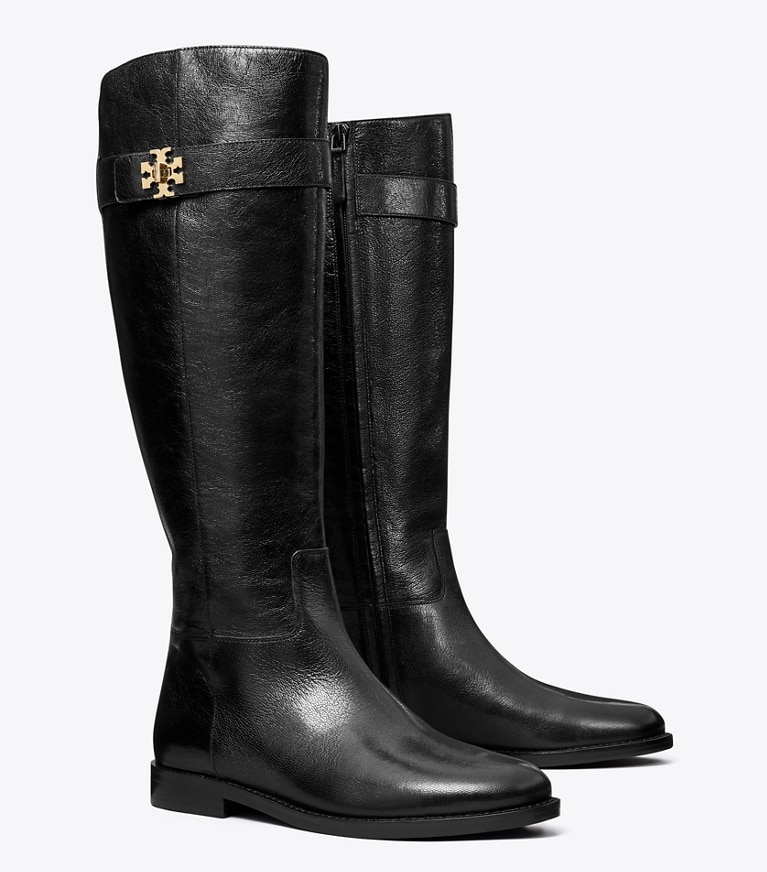
There is no published universal fit rule for the dress range, and anyone offering you one is guessing. Footwear, not clothing, is where the circulating fit consensus sits: buyers commonly report the Miller sandal running slightly small and narrow, and the Reva flat being narrow through the toe box. Neither of those observations transfers to a dress. With dresses it is fabric that does the predicting. Because they have their own give, jersey and knit styles generally track a straightforward size choice; woven cotton and linen, by contrast, depend entirely on where the seams fall. Size to the shoulder and armhole when you are between sizes in a woven style, as that is the part that cannot easily be altered.
The finish, the care and the sale
Tory burch shoes are made to finish these dresses, more or less by design. Flat sandals at about $200 and loafers about $325 handle the cotton and linen groups, and heeled sandals near $325 do the evening job. Jersey dresses run into autumn under Chelsea boots around $395, and a Perry tote near $395 works for weekday looks. On care, material-specific guidance is published by the brand in its client services pages, and failing that, dry-clean or hand-wash knitwear cold and dry it flat. A tory burch sale is worth waiting for on the resort and weekend groups, where recurring Semi-Annual events have carried reductions of up to around half. It is worth adding that the brand operates no online outlet, so genuine discounted stock is found in its own stores, on its own site, and at authorised retailers.